
15 Beginner Motorcycle Tips for New Riders

Welcome to the world of motorcycling! Riding a motorcycle requires skill, knowledge, and safety awareness. We want you to keep the shiny side up and the rubber side down, so we’re here to help you with some beginner motorcycle tips.
In this guide, we’ve put together 15 essential riding tips tailored for beginner motorcycle riders.
Whether you’re searching for information before you get started, or you’ve already been out shopping for your first bike and are wondering what to work on next, we’ve got you covered.
So, gear up, twist your throttle, and get ready to experience freedom and excitement on the road like no other!
1. Take a Motorcycle Safety Course
If you have no experience, a Motorcycle Safety Course is the perfect place to start. And even if you have ridden dirt bikes or ridden as a passenger before, we still highly recommend that you take a course.
A proper safety course will cover the skills necessary to get you out on the road, covering the basic operation of a motorcycle, slow speed practice, and hard braking. You’ll be able to use the course’s bikes and they will often provide helmets as well.
It doesn’t have to be the MSF either; there are plenty of options out there for a motorcycle training course. Completing a course may make it easier to get your motorcycle license, and you might even catch a break on your insurance.
Remember: a course is just the beginning of developing all the necessary skills as a rider.
2. Choose a Motorcycle for New Motorcycle Riders
If you’re on the hunt for your first set of wheels, get a bike to learn on before buying your dream bike. Regardless of your size or stature, this will typically be a smaller bike with a low center of gravity, and something you can easily flat-foot.
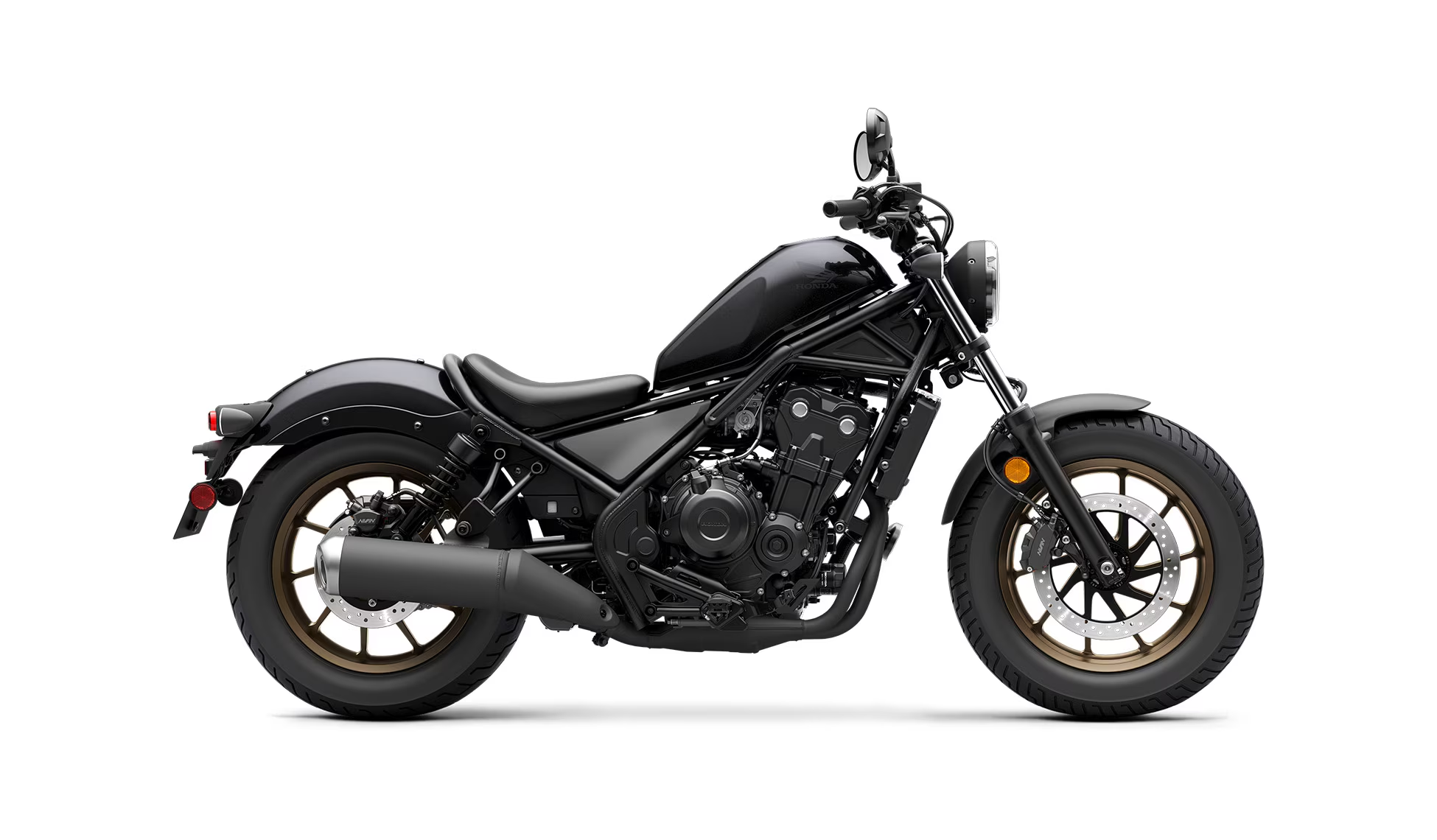
Are you buying used? Get something cheap and reliable to get you started.
Planning to buy new? Don’t be afraid to go to a bunch of dealers and try sitting on a bunch of different bikes to see what you might be comfortable with. Bring a friend who can test-ride them and give you their thoughts if you’re not comfortable riding on your own yet.
Starting with a smaller, beginner-friendly motorcycle will help you build confidence and skills before upgrading to a larger bike.
3. Wear Proper Safety Gear
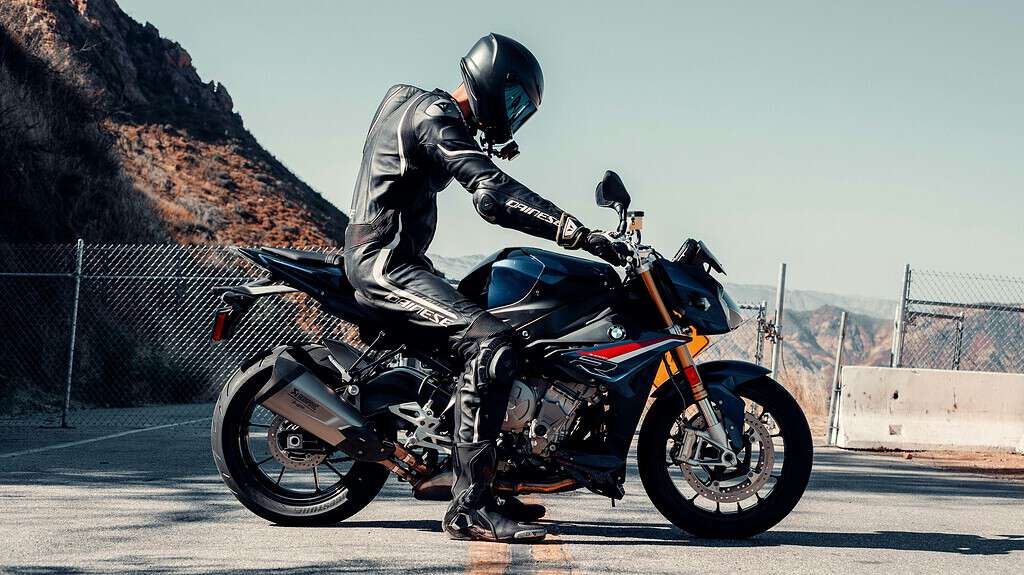
One of the most common mistakes we see with new riders is that they spend all their cash on the bike and forget about the motorcycle gear. Appropriate safety gear is essential to keep you safe from spills and drops, but also from other debris that might get kicked up on the road.
If you prioritize safety, you’ll be able to ride longer and build confidence from the get-go.
4. Make Sure Your Clothing Fits Right

The most important consideration after getting gear is making sure that it fits right.
A helmet that wobbles around won’t protect your noggin in the event of a crash, and a jacket that is flapping around isn’t going to be worth its salt, nor will it be comfortable.
A motorcycle shop apparel specialist will be able to make sure that your gear fits you right, keeping you safe from that nasty road rash.
5. Learn Your Friction Zone
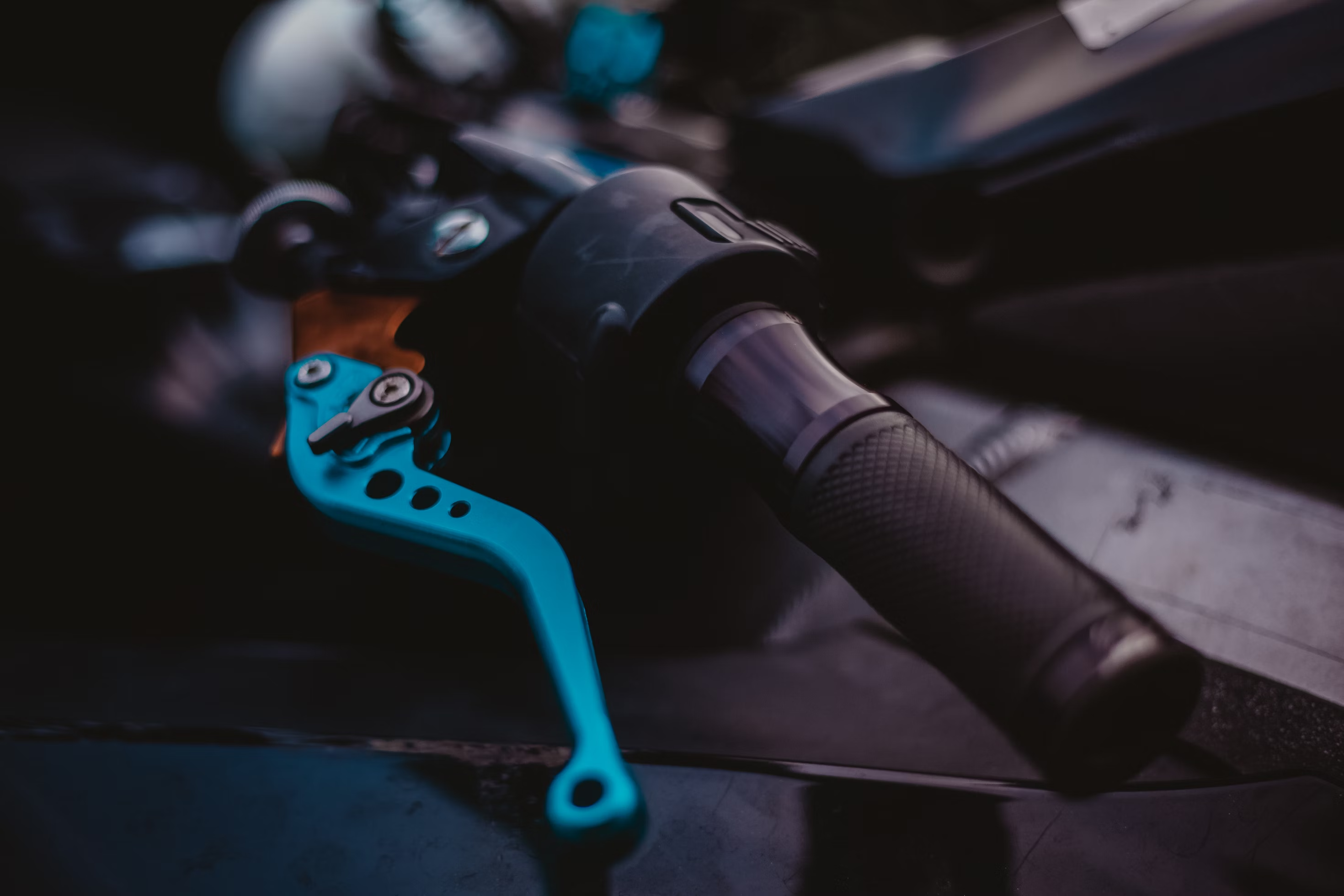
For those who have not driven a car with a manual transmission before, grappling with operating a clutch lever can be a frustrating part of learning to ride a motorcycle.
Smooth shifting on a bike requires a good understanding of the friction zone: the point where your transmission engages the drive system (shaft, belt, or chain depending on the motorcycle).
Getting familiar with your bike’s friction zone will help you be smooth off the line and through the gears.
Every bike is different, but building muscle memory on the clutch lever is, well, clutch.
6. Learn Low Speed Control
Picture this: you’re on your way home on your commute, and the worst happens: Traffic and lots of it.
Low speed control is the difference between navigating stop-and-go gracefully or struggling through it.
The best way to improve is to head to a parking lot and practice: Hold your foot on the rear brake with consistent throttle. Adjust the rear brake pressure to control speed while squeezing the tank with your knees. You’ll find overall you’re a lot more balanced and those high-traffic days will become a breeze!
7. Practice Braking
Speed is great, but if you can’t stop, you’re in for a world of hurt. Emergency braking is a skill that needs to be practiced for all road and weather conditions.
Knowing the limits of your bike’s braking system will help you immensely. And if you have a bike with ABS, knowing at what point it triggers is also helpful to feel BEFORE you’re in an emergency.
It’s worth a regular visit to the parking lot to practice proper braking techniques, including using both front and rear brakes simultaneously and applying incremental pressure to avoid skidding.
8. Never Ride Outside Your Ability Level
Everyone starts somewhere, and to avoid losing control, it’s important to build your skills over time. There is truly no rush!
It’s exciting to start riding motorcycles; it’s exciting to get out there on group rides; and it’s exciting in general to be on two wheels. But we want to first and foremost stay safe, while also having fun.
Practice the basic skills early and often to build confidence, and don’t be afraid to go at your own pace, no matter who you’re riding with.
If it starts to feel too dangerous for you, that’s a good sign to let off the throttle and take it easy.
9. Look Where You Want To Go
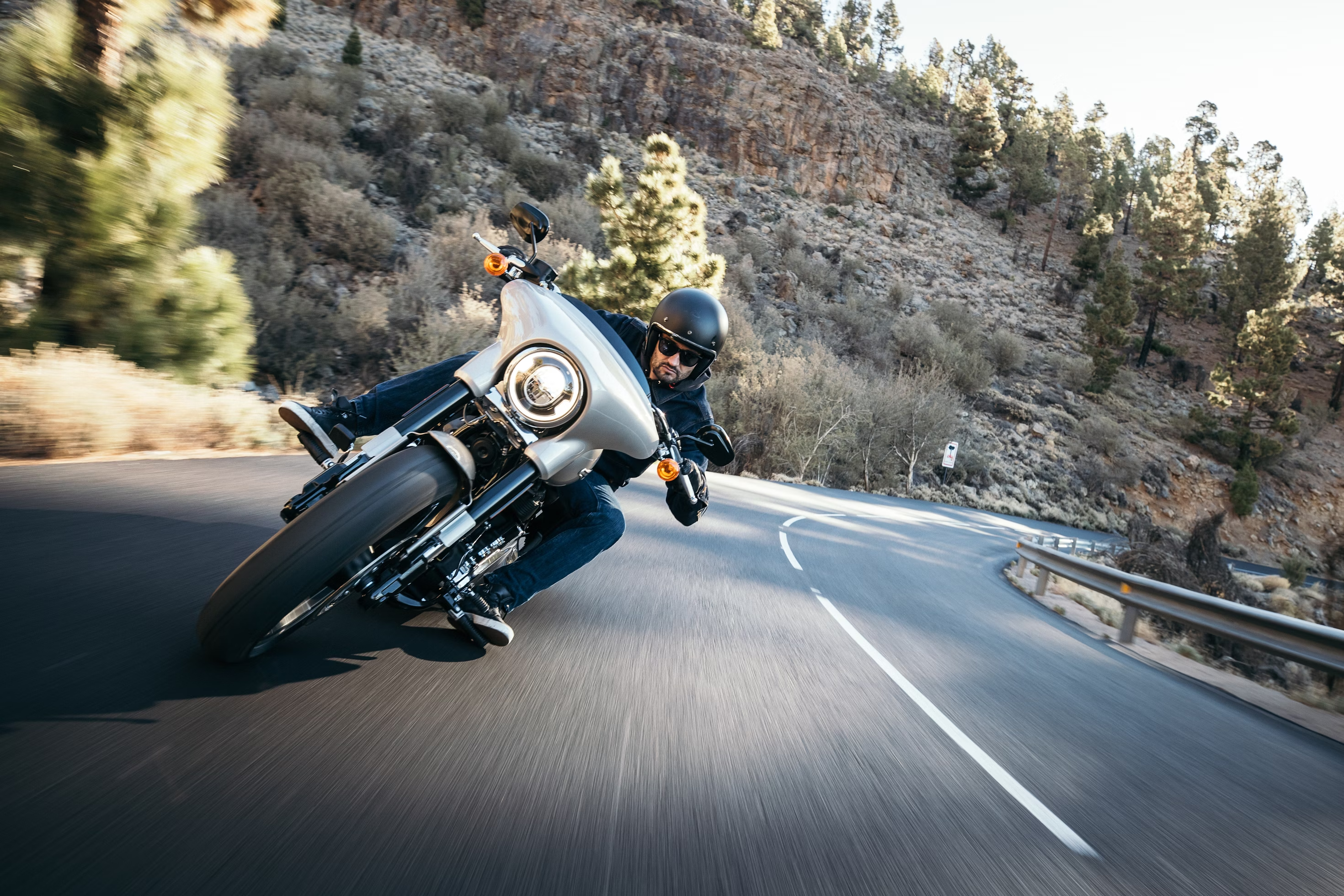
When in a panic, it’s a common mistake for beginners to target fixate on an obstacle: a turn that’s too tight, debris in the road, or some other unexpected condition.
Nobody wants to have a motorcycle accident, so work to train your brain to look away and back to the road in these instances. Your body will follow where your eyes are!
After a while, it will simply become second nature.
10. Learn to Read Road Conditions

That curvy road is a recipe for having a blast, but without understanding road conditions, it could also be a recipe for disaster.
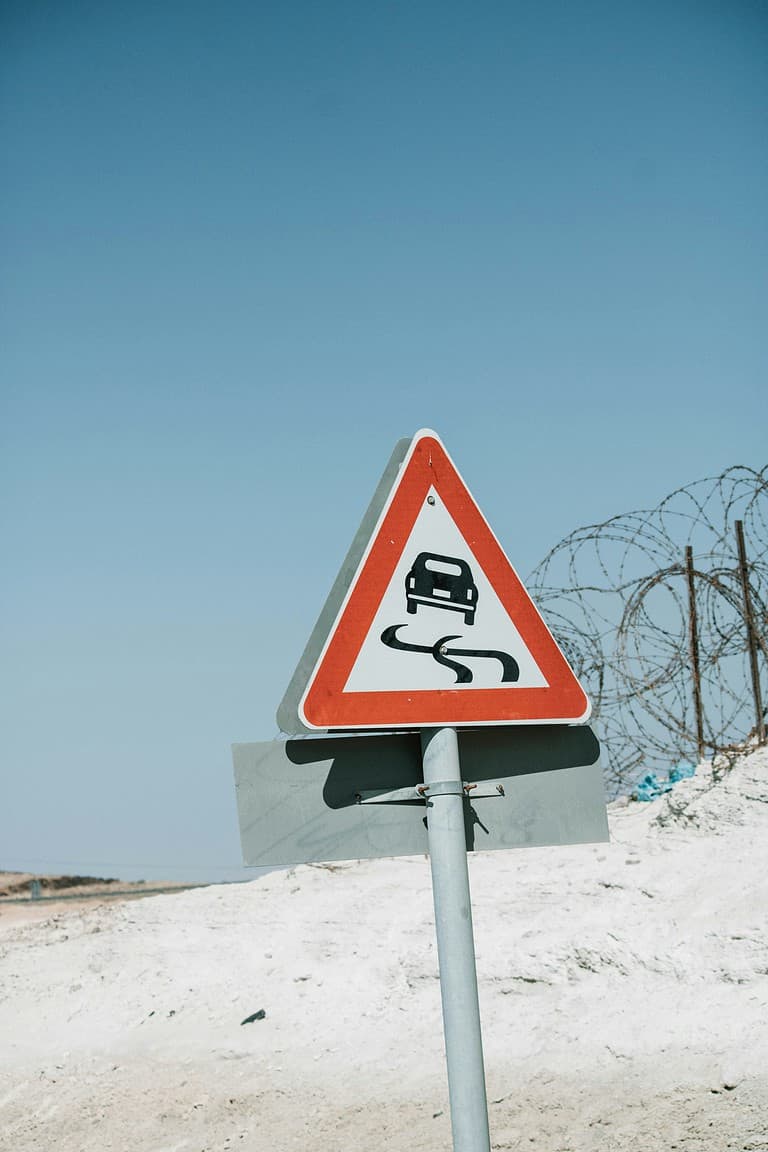
Keep an eye out for the type of pavement, the number of tar snakes, grass clippings, and anything else that could result in a loss of grip between your tires and the pavement.
In the autumn and winter seasons, road paint and sewer covers can be particularly slippery, too. Over time noticing these things will become automatic.
11. Start on Smaller, Local Roads First
As a new rider, it’s a lot more comfortable to ride on the roads where you’re most familiar first.
The riding experience is completely different from driving a car, so it’s important to build confidence and have fun in your early riding days.
Starting on smaller roads that are familiar to you can remove the distraction of other drivers, and give you a chance to build muscle memory on your bike.
12. Learn to Work on Your Bike
You never know where having some mechanical know-how will rescue you, so it’s worth at least learning the basics about your bike.
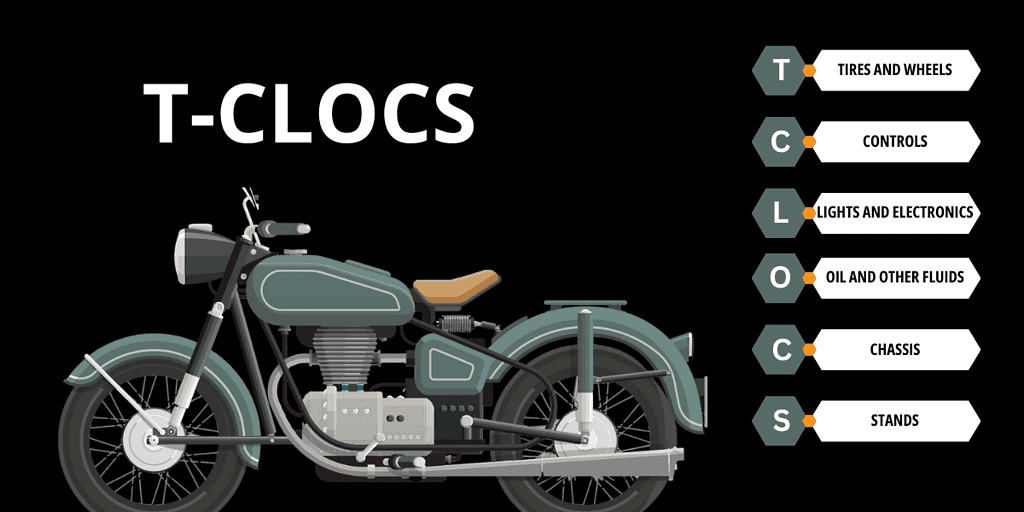
A good place to start is the T-CLOCS concept, a way to inspect your bike before every ride:
- Tires and Wheels: Make sure you have the right tire pressure, and that your wheels aren’t bent, broken, or cracked.
- Controls: Check all levers, shift lever, cables, hoses, and throttle for operation.
- Lights and Electronics: Check all your lights work, reflectors and lenses are clean, headlamp and tail lamp work, passing light and high beam are in operation, and brake light and turn signal work.
- Oil and Other Fluids: Check oil level, fuel, and coolant levels. Ensure that there are no leaks on the bike or the ground.
- Chassis: Inspect frame for cracks. Check suspension components and chain for excessive wear or damage.
- Stands: Check the side stand or center stand for cracks or damage, and ensure that the spring is in good working order to hold the stand in position.
Some other great skills to learn are how to patch a tire after a puncture, how to change your oil, how to swap your air filter, and how to adjust your bike to fit your size and weight.
13. Make Yourself Visible
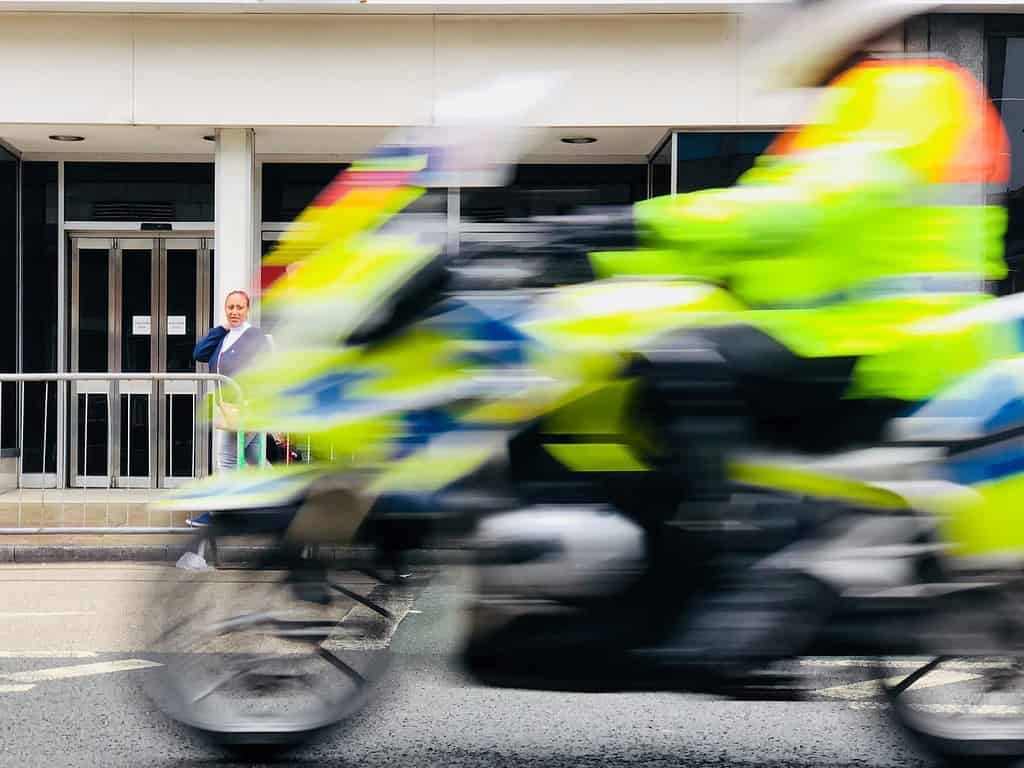
Time to shed some light on an important topic: being visible.
You may be living your best two-wheeled life, but those four-wheeled giants on the road might not even know that you’re there! Hi-vis gear is one potential avenue, but there is a lot of gear out there that is reflective without being fluorescent yellow, too.
You can also improve your visibility by riding defensively, considering lane position, and avoiding being in blind spots of other drivers.
14. Take Breaks and Stay Hydrated
Traveling 500 miles in a day is easy, right?
In a car, sure. It can be a little more taxing on a motorcycle. The combination of the sun, wind, and high-attention focus can mentally and physically wear you out.
Make sure you take breaks to rehydrate with high-electrolyte drinks and don’t get too ambitious with the mileage. It will take a few trips to figure out what works best for you!
Fully faired touring bikes can help ease some of the fatigue, but it’s still important to stay hydrated and take regular breaks during long rides to avoid fatigue and maintain alertness.
15. Budget for Accessories and Maintenance
Just like a car, bikes need regular maintenance. Whether you’re taking your motorcycle to the dealer or doing the work yourself, you’ll need to factor in that cost.
If you’re anything like us, you also want to make your new ride your own with some accessories and upgrades. Make sure to leave yourself some depth in your pocket to buy some parts right off the bat.
And if you’re looking for ideas of what to get next, check out an extensive list here.
Beginner Motorcycle Tips Conclusion
And there you have it: 15 essential beginner motorcycle tips to kickstart your journey on two wheels with confidence.
Ride safe, ride smart, and most importantly, enjoy every moment of the journey ahead. Until next time, keep the shiny side up and the rubber side down!
What else did we miss? Let us know by shooting us an email.